Skip to content
Working Equitation Quinte Working Equitation Bay of Quinte
Open menu

The discipline

Working equitation.

A discipline born from working stock horsemanship in the Iberian peninsula and southern Europe — equal parts classical dressage, agility, and the practical requirements of a horse that can go from farm to competition.

Where it comes from

Working equitation grew out of the day-to-day riding traditions of Portugal, Spain, Italy, and France — countries where horses were used to work the farm and move cattle across varying open terrain. The skills those riders needed are the skills the discipline tests: a horse that's light in the hand, quick on its feet, and willing to face unfamiliar obstacles without losing its composure.

It was formalized as a competitive sport in the 1990s and has spread internationally over the last two decades. Today you'll find it ridden in just about every style — including Iberian, dressage, western, Australian stock, jump — by riders who like the puzzle of blending precision and practicality.

The four trials

Competitions are judged across three or four phases.

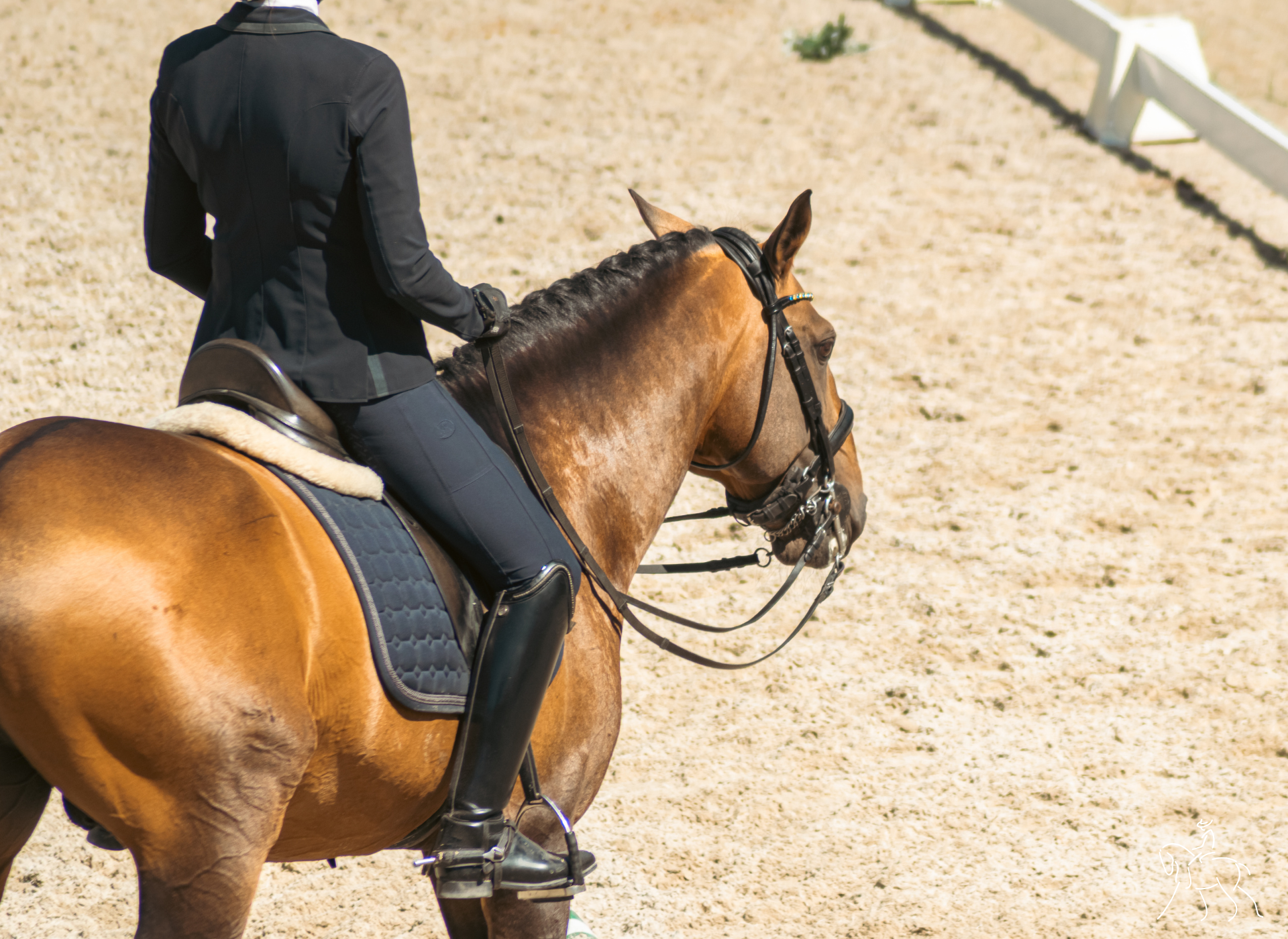
A buckskin horse ridden in dressage attire on a working-equitation court.
01 Foundation

Dressage

A classical test ridden in a standard arena, with movements scaled to the rider's level. Working-equitation dressage tests look familiar to dressage riders, but reward an even quieter, more available horse with a workmanlike attitude — everything that comes after depends on it!

A bay Iberian horse and rider in traditional Portuguese dress competing in Ease of Handling.
02 Precision

Ease of Handling

A choreographed obstacle course commonly ridden at the trot and canter, depending on the level. Riders work through up to a dozen elements — bridge, drums, garrocha (carrying a long pole), gate, single-stride changes, jug pickup — and are judged on harmony, rhythm, and accuracy rather than speed.

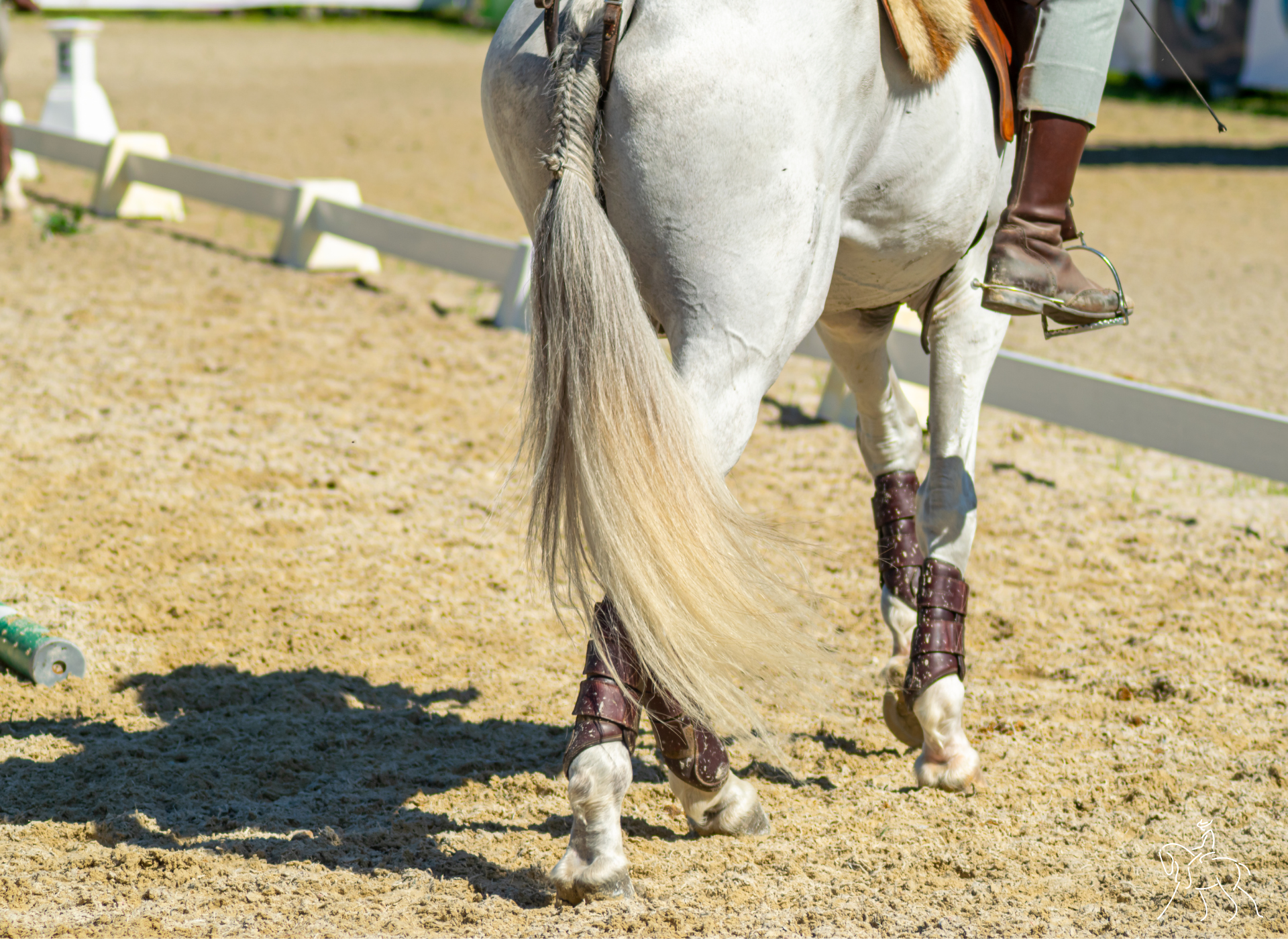
A grey horse in motion — a study in balance and quick footwork.
03 Trust

Speed

The same obstacles, ridden against the clock. Faults add time; clean lines and quick turns subtract them. This is the phase where you find out whether the partnership you've built holds up under pressure.

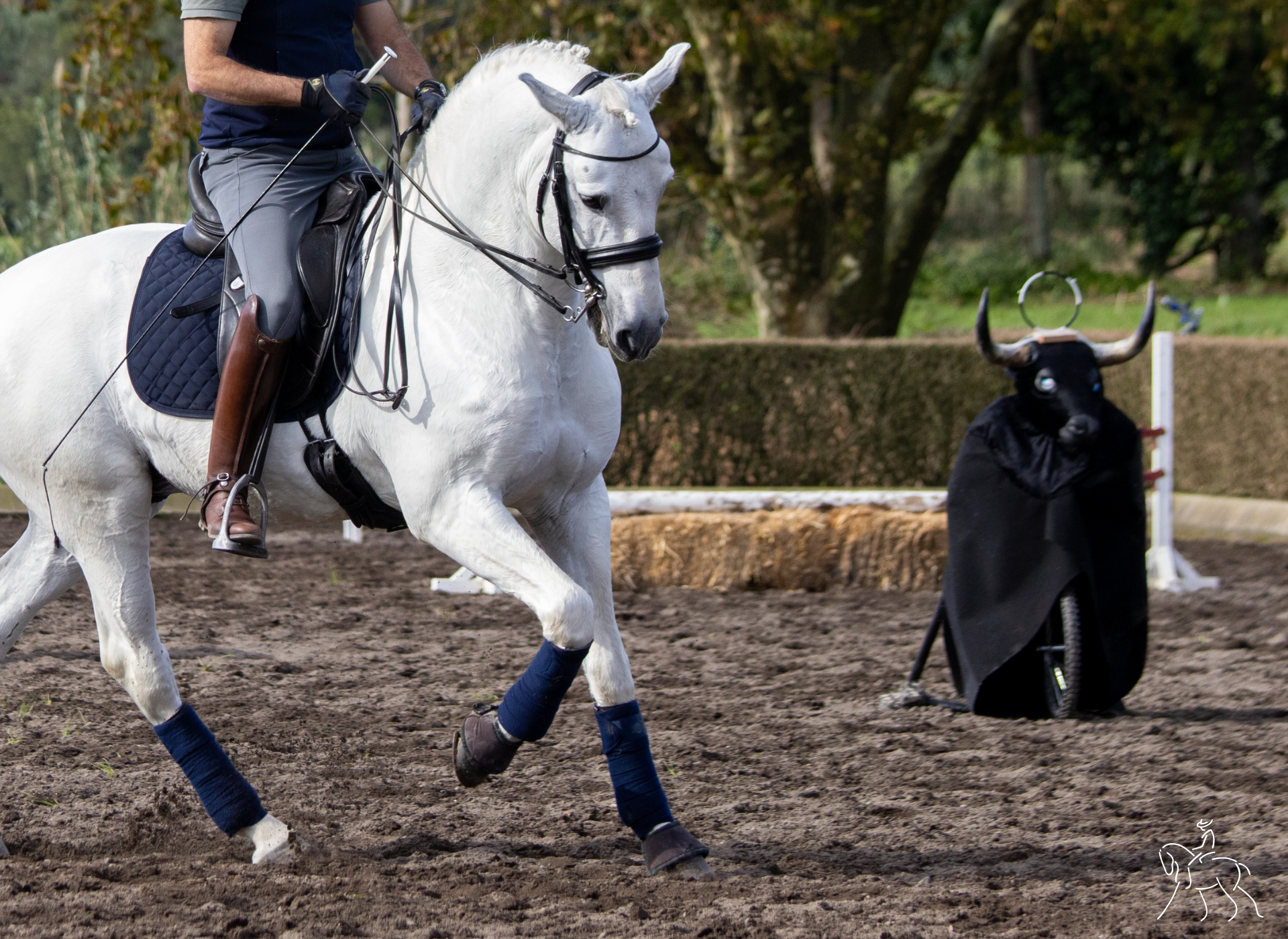
A grey horse and rider working a wooden bull target — the Iberian way to train cattle work.
04 Origins

Cattle

A team trial where three or four riders work together to separate a designated cow from a small herd and drive it across a line. This is the historical root of the discipline! In eastern Ontario this trial is rarely held (cow work isn't part of the regional fabric the way it is further west) but it remains foundational to the sport.

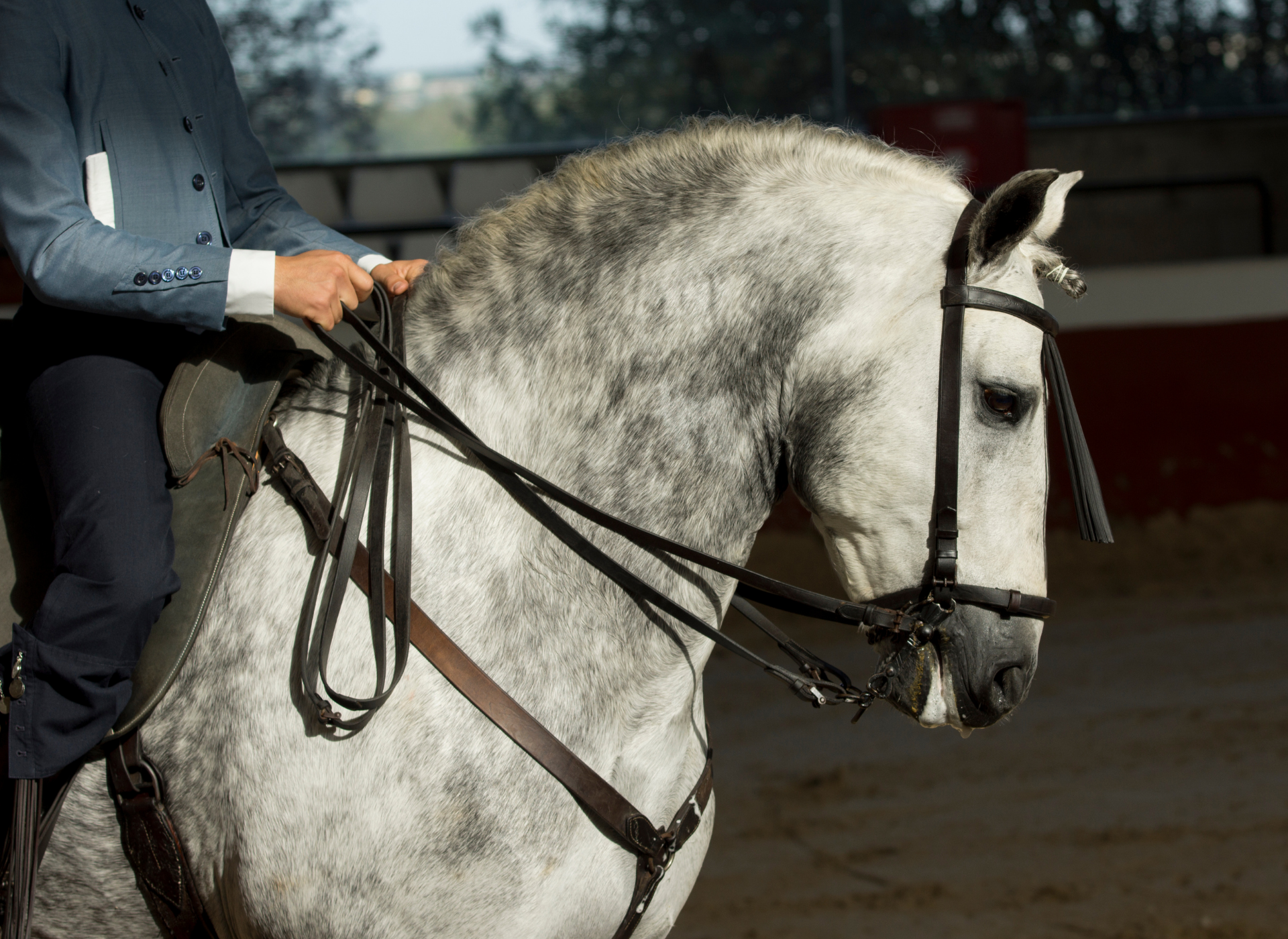
A dappled grey Iberian horse in classical bridle, presented at the halt.

What makes a working equitation horse?

There isn't one! Or rather — there are many, and what unites them is temperament and training, not breed.

Willing & brave

The obstacle phases ask a horse to walk over a bridge, between barrels, past flapping flags without batting an eye. A confident, curious horse goes a long way.

Light & balanced

Tight turns, lateral work, and rein-back show up in every course. A horse that's soft in the hand and rocked back on its haunches will be more comfortable than a long, heavy forehand mover.

Trainable

This trait, above all, is what separates a good working eq horse from the crowd. You'll see all breeds mixed in across all levels of competition, regionally and internationally..

Want to see it in person?

Auditing our clinics and schooling shows is the easiest way to get a feel for the sport. Most riders are happy to talk you through what they're doing.

See upcoming events